
Anyone who has booked a long-distance bus online has used a bus reservation system, even without knowing the name. It is the software that shows which trips run, which seats are free, takes the payment and sends the ticket, all without a single phone call. For a bus or coach operator, owning that system instead of selling only at a counter can change the whole business. This guide explains what a bus reservation system is, how it works and how you can run your own.
What is a bus reservation system?
A bus reservation system is online software for selling bus tickets and managing the trips behind them. On the passenger side it is a website and app where people search a route, choose a date, pick a seat, pay and receive an e-ticket. On the operator side it is an admin dashboard that manages routes, buses, timetables, seat layouts, boarding points, payments, passengers and reports.
It automates the whole booking process so it runs around the clock without staff at a desk. A traveller can book a 6 a.m. departure at midnight from their phone, pay securely and get an instant ticket, while your office is closed. And because it is software you own, you keep the passenger relationship and the full fare instead of paying a commission to an aggregator on every seat.
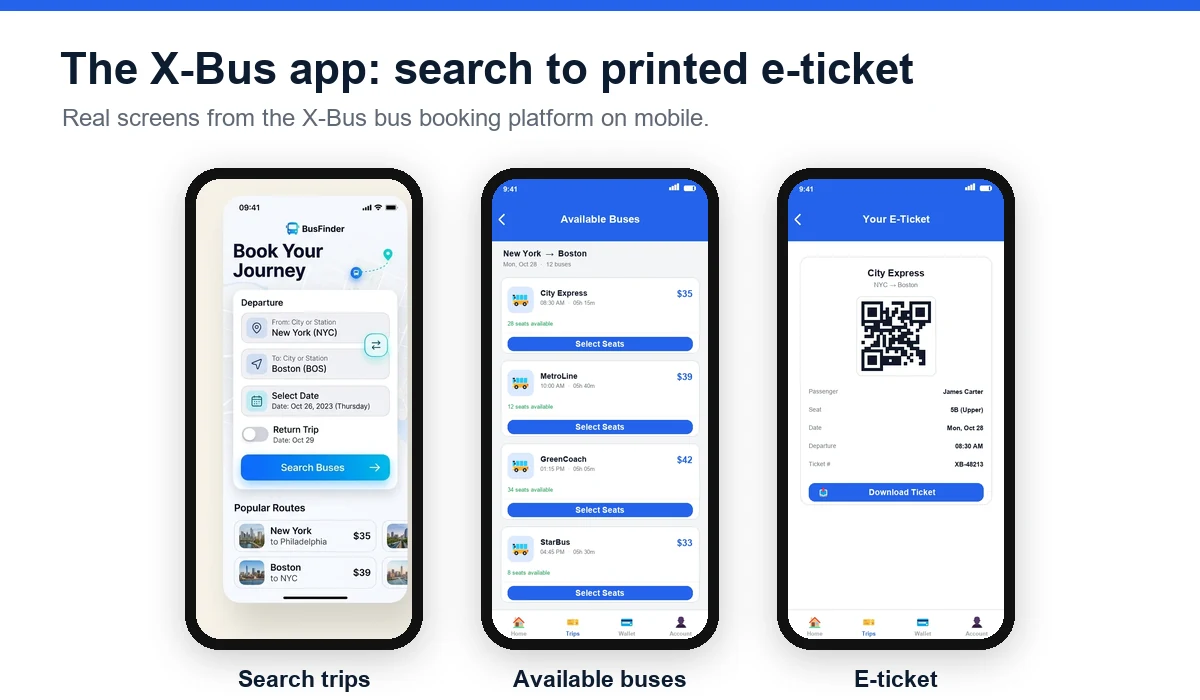
How online bus ticket booking works
Whatever the route, the booking flow is consistent, and understanding it shows exactly what the software is doing for you.
- Search. The passenger enters an origin, a destination and a travel date. The system shows only trips that genuinely run and still have free seats.
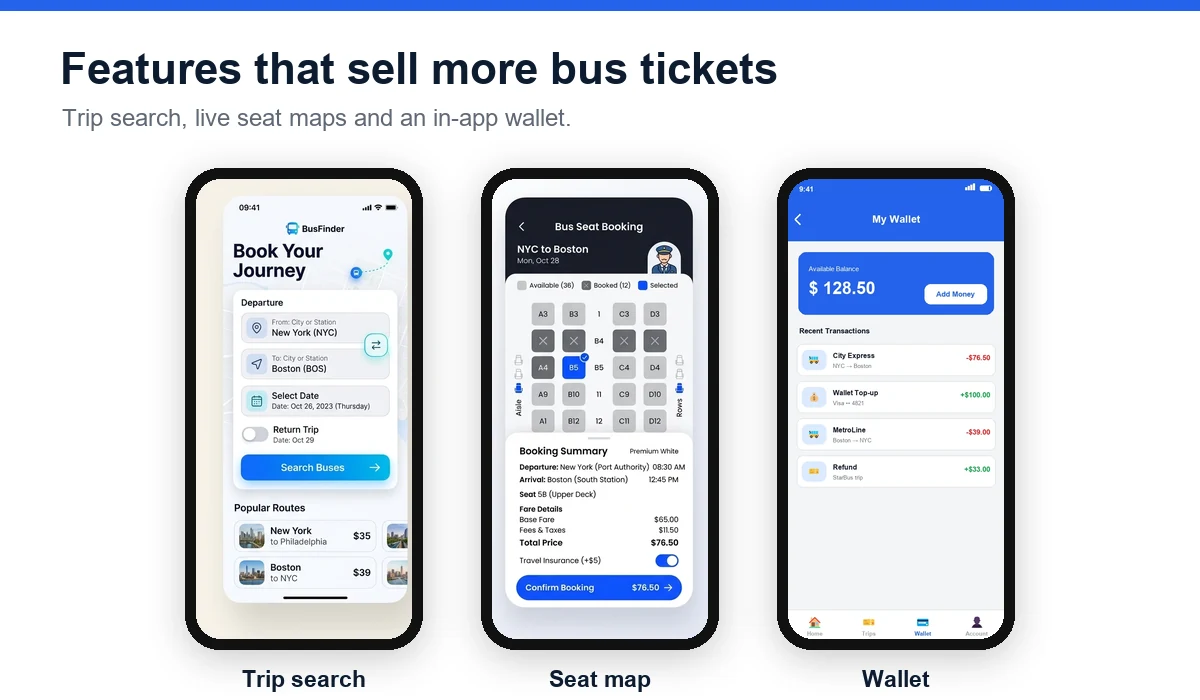
- Choose a seat. A live seat map shows which seats are taken, so the passenger picks the exact seat they want, including upper or lower deck where relevant.
- Pay. Checkout takes payment securely through a gateway such as Stripe, PayPal or a local provider, in the passenger's own currency where supported.
- Get the e-ticket. The moment payment clears, the system reserves the seat, emails an e-ticket with a QR code, and updates the seat map so the same seat cannot be sold twice.
- Board and manage. At the boarding point the ticket is scanned, and the operator tracks sales, cancellations and refunds from the dashboard.
Who uses a bus reservation system?
- Intercity and long-distance bus operators selling seats on fixed routes and timetables.
- Coach and tourism companies running scheduled or charter services.
- Ticketing agencies that sell on behalf of several operators and earn a margin.
- Transport marketplaces that list many operators in one place and take a commission.
- Shuttle and private fleet services that want online booking instead of phone calls.
What a bus reservation system manages
Older counter software handled little more than a printed ticket. A modern platform is modular and runs the whole operation from one dashboard.
- Routes and trips: origins, destinations, stops, departure times and recurring schedules.
- Buses and fleet: vehicle types, seat layouts, decks and amenities.
- Seat management: live seat maps that block a seat the instant it is sold.
- E-ticketing: QR-coded tickets by email and SMS, scanned at boarding.
- Boarding and dropping points: multiple pickup and drop locations per route.
- Payments and wallet: gateways, refunds, invoices and passenger wallets.
- Offers and coupons: seasonal discounts and promo codes.
- Reports: revenue, occupancy, popular routes and operator payouts.
Our X-Bus platform includes all of these as modules, so you switch on exactly what your service needs.
Why own your bus booking software instead of renting a counter on a marketplace?
Large ticket aggregators bring passengers, but they charge a commission on every seat, hold the passenger relationship and control how you appear next to competitors. Owning your booking software flips that around:
- You keep the full fare that would otherwise lose a commission on every ticket.
- You own the passenger data and can market new routes and offers directly.
- You control the brand from search to boarding, not a marketplace listing.
- You set your own rules on pricing, cancellation and refunds.
Most operators use both: aggregators for extra reach, and their own booking site to take direct, commission-free sales from passengers who already know them.
Key features that matter
When you compare bus reservation systems, these features separate a professional platform from a basic script.
| Feature | Why it matters |
|---|---|
| Live seat maps | Real-time seat locking prevents double booking on the same trip. |
| Secure payments | Stripe, PayPal and local gateways with automatic invoices and refunds. |
| Multi-currency | Cross-border passengers browse and pay in their own currency. |
| Multi-language | Serve passengers in their native language to reduce confusion. |
| Automated tickets | QR e-tickets and reminders sent by email and SMS for you. |
| Reports and payouts | Revenue, occupancy and operator payouts in PDF and Excel. |
We cover these in depth in our guide to online bus ticketing system features.
The technology behind it
A capable platform such as X-Bus is built on Laravel, a secure and widely used framework, and runs on standard web hosting, so it is affordable to operate. It connects to payment gateways for secure checkout, supports multiple currencies and languages out of the box, and can run as a multi-operator marketplace where other bus companies list while you earn a commission. Because you receive the full source code, nothing stops you customising the design, routes or workflows later.
Counter sales vs online booking: the numbers
It is worth understanding why operators move online, because it usually comes down to money and lost seats. A counter only sells while it is staffed and open, and empty seats on a departed bus earn nothing. An online reservation system sells the same seats every hour of every day, including nights and holidays, and fills trips that the counter alone would leave half empty. Passengers also prefer to choose their own seat and pay in advance rather than queue. When you add the commission saved on direct sales versus an aggregator, the system often pays for itself within the first busy season.
How a bus reservation system helps different operators
The same platform solves very different problems depending on who runs it:
- An intercity operator replaces phone-and-paper bookings with a live seat map, takes payment in advance, and stops double bookings on peak departures.
- A tourism coach company sells scheduled tours and charters with clear pickup points and online payment.
- A ticketing agency sells several operators' trips from one site and earns a margin on each seat.
- A transport marketplace lists many operators, approves them, and earns a commission on every booking.
Mistakes to avoid when choosing a bus booking system
- Picking a counter-only tool. Software that cannot sell online leaves you dependent on walk-ins and aggregators.
- Forgetting mobile. Most passengers book on phones, so a clumsy mobile checkout quietly costs you most of your online sales.
- Ignoring local payments. If passengers cannot pay the way they prefer, including cash options where needed, they abandon the booking.
- Renting instead of owning. A closed, hosted system holds your passenger data and limits your branding. Owning the source code keeps you in control.
- Skipping seat maps. Without live seat locking you risk selling the same seat twice and angry passengers at boarding.
Common questions
Does it stop the same seat being sold twice?
Yes. A live seat map locks each seat the instant it is reserved or paid for, across the website, app and any connected operators, so a seat can only be sold once per trip.
Can passengers pick upper or lower deck seats?
Yes. Seat layouts are configurable per bus, including double-deck and sleeper layouts, so passengers choose the exact seat and deck they want.
Will it work for cross-border routes?
Yes. Multi-currency and multi-language support let passengers on international routes browse and pay in their own currency and language.
Do I need technical skills to run it?
No. The platform is managed from a dashboard, and our team can install, brand and configure it for you. You receive the full source code for custom changes later.
Online booking vs a physical ticket counter
Many operators still rely mainly on a ticket counter, so it helps to see plainly what a reservation system adds rather than replaces. A counter sells only while it is staffed and open, is limited to the people who physically come to it, and depends on paper lists that are easy to lose or duplicate. A reservation system sells every hour of every day, reaches anyone with a phone anywhere, and keeps a single accurate record of every seat. The counter still has a role for walk-up passengers, and the best setup uses both: the counter and the online system share the same live seat map, so a seat sold at the window instantly disappears online and vice versa. That way you never double-sell, you capture passengers the counter alone would miss, and your staff spend less time on manual booking and more on helping travellers. The reservation system does not make your counter obsolete; it makes the same operation reach much further.
How a bus reservation system improves the passenger experience
It is easy to focus on what the software does for the operator, but passengers feel the difference too, and that is what brings them back. Instead of calling an office during opening hours, a passenger books in a minute from their phone, at any time, and picks the exact seat they want rather than taking whatever is left. They receive an instant e-ticket with a QR code, so there is no paper to lose and no queue to confirm a reservation. A departure reminder by SMS means they arrive on time at the right boarding point, and if plans change, cancellation and refund are handled cleanly without an argument. For regular travellers, a saved profile and an in-app wallet make the next booking even faster. All of this builds the trust that turns a one-off passenger into someone who checks your site first for every trip, which is exactly the loyalty that reduces your dependence on commission-charging aggregators.
What to look for when buying bus booking software
If you are comparing options, a few questions quickly separate a serious platform from a weak one. Ask whether you receive the full source code and own your data, because anything less locks you in. Confirm it has live seat maps with real-time locking, not just a seat picker, so you never double-sell a seat. Check that it supports the payment methods your passengers actually use, including local options and cash where relevant. Make sure it handles multiple boarding and dropping points per route, multi-currency and multi-language if you cross borders, and multi-operator features if you plan to grow into a marketplace. Insist on a live demo and complete a real test booking yourself, including a cancellation, because nothing reveals quality faster than using the system as a passenger would. Finally, check what support is included after launch, since the first few busy weeks are when you most need a responsive team behind you.
X-Bus: a ready-made bus reservation system
X-Bus is an all-in-one, AI-assisted bus booking and ticketing platform built on Laravel, covering routes, trips, seat selection, e-tickets, operators, boarding points, payments and offers from one dashboard, with multi-currency, multi-language and multi-operator support and the full source code included. It comes in three one-time packages:
| Package | Price (one-time) | Best for |
|---|---|---|
| Basic | $299 | A focused launch with an installation guide. |
| Professional | $599 | Full installation and server setup included. |
| Enterprise | $1000 | Large, multi-operator marketplaces with complete setup. |
Every plan includes six months of support. See the live feature list and request a demo on the X-Bus product page. If you also sell hotels or tours, our broader X-Booking platform adds those booking types too.
In short
A bus reservation system is what turns a bus or coach operator into an online one that sells seats around the clock, in any currency, without losing a commission on every ticket. Whether you run three routes or three hundred, owning the system means owning the passengers and the fares. If you would like to see it working for your service, message our team and we will walk you through it.