

Australia has one of the highest rates of LinkedIn use in the world relative to its population, and recruiters in Sydney, Melbourne, Brisbane, Perth and Adelaide use it every day. It is also a key channel for B2B sales across Australia and New Zealand. This guide explains what LinkedIn Premium costs in Australian dollars, how GST works, which plan to choose, and how to use LinkedIn to land a role or win clients in Australia.
LinkedIn Premium price in Australia at a glance
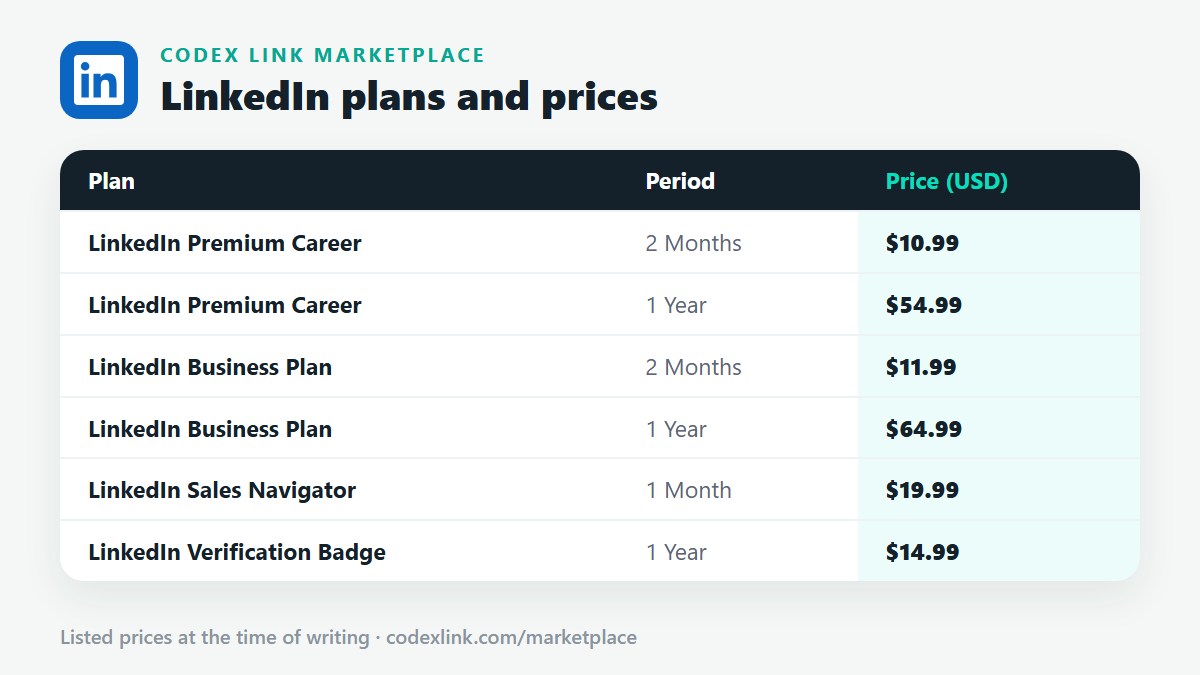
| Plan | US list price (monthly) | Approx. AUD* | CodeX Link price | Approx. AUD* |
|---|---|---|---|---|
| Premium Career | about $29.99 | about 46 / month | $10.99 / 2 months $54.99 / 1 year | about 17 about 85 |
| Premium Business | about $59.99 | about 93 / month | $11.99 / 2 months $64.99 / 1 year | about 19 about 101 |
| Sales Navigator Core | about $99.99 | about 155 / month | $19.99 / 1 month | about 31 |
*At an example rate of 1.55 AUD per USD, before GST. LinkedIn usually charges Australian members in AUD at its own local price, which may differ from a direct conversion; annual billing usually lowers the monthly cost. LinkedIn shows the final price including GST at checkout.
GST on LinkedIn Premium
Australia applies 10% Goods and Services Tax to digital products and services sold to Australian consumers by overseas companies. LinkedIn adds GST at checkout based on your location. Businesses registered for GST should keep their tax invoices and check with their accountant about claiming input tax credits.
Which plan should you choose?
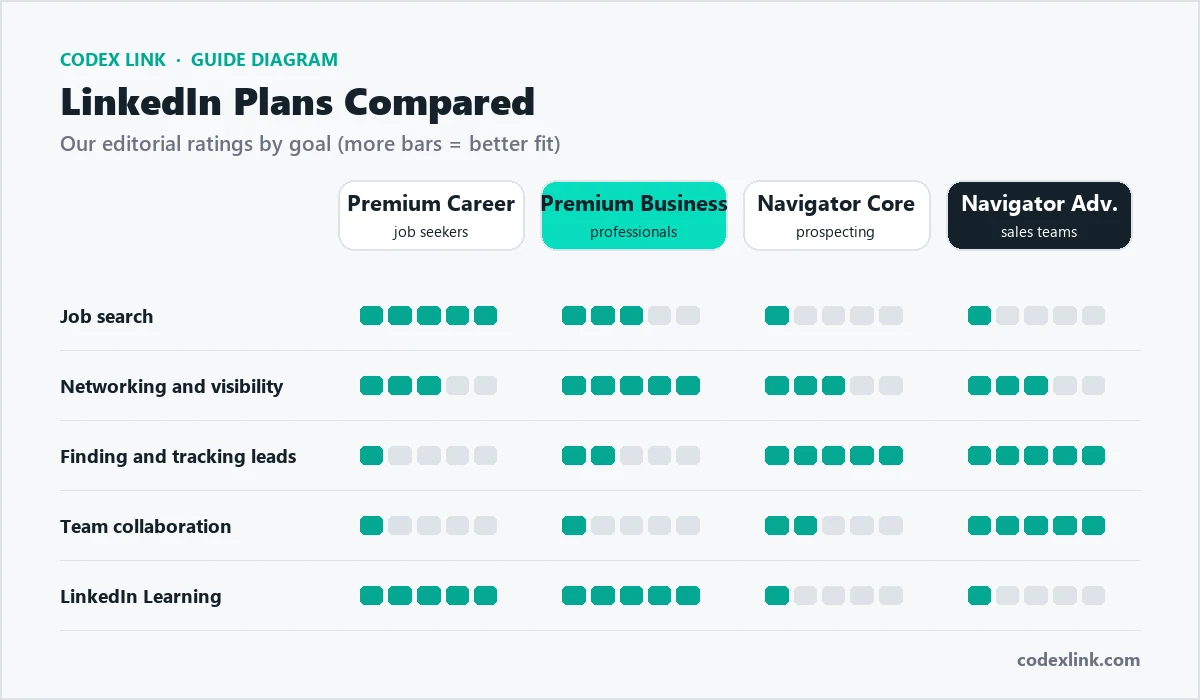
- Premium Career: for job seekers, graduates and skilled migrants. See our Premium Career guide.
- Premium Business: for consultants, contractors and owners building a network. See our Premium Business guide.
- Sales Navigator: for B2B prospecting across Australia and New Zealand. See our Sales Navigator guide.
How recruitment works in Australia
A large share of professional roles in Australia are filled through recruitment agencies, and both agency and in-house recruiters source candidates directly on LinkedIn. That makes your profile as important as your resume.
- Set your location to the city where you live or plan to work.
- Turn on Open to Work for recruiters, listing job titles and locations.
- Use Australian job titles and terms, such as "resume" or "CV" and local qualification names.
- State your work rights clearly in your About section where relevant, for example citizen, permanent resident or the type of visa you hold.
- Connect with specialist recruiters in your industry and city, and keep in touch with them.
A headline built for Australian recruiters:
Senior Project Manager | Infrastructure & Transport | PMP |
Full working rights | Sydney, NSW
Skilled migrants and international candidates
Australia's skilled migration programmes bring many professionals from India, the Philippines, the UK, China, South Africa, Pakistan and elsewhere. LinkedIn helps you understand the local market before and after you arrive. Translate your experience into Australian terms, mention skills assessments and registrations relevant to your occupation, and network with people from your home country who already work in your field in Australia. For employer-sponsored visas, be clear about whether you need sponsorship.
Key Australian job markets
- Sydney: finance, technology, professional services and head offices.
- Melbourne: technology, health, education, and arts and culture.
- Brisbane: infrastructure, construction, government and growing technology.
- Perth: mining, resources, engineering and energy.
- Adelaide and Canberra: defence, government and research.
Regional Australia
Regional cities and towns, from Newcastle and Geelong to Townsville and Toowoomba, often have strong demand in health, education, engineering, agriculture and trades. Employers there may find it harder to attract candidates, so a clear LinkedIn profile showing willingness to relocate can stand out. Add regional locations to your Open to Work preferences if you are flexible.
Working across Australia and New Zealand
Many companies operate across Australia and New Zealand, and professionals move between the two markets. If you are open to roles in both countries, mention it in your preferences and headline, and connect with recruiters who cover the ANZ region. Sales teams often manage a combined ANZ territory, so Sales Navigator lists can include both countries.
Time zones and remote work
Australia has several time zones, and daylight saving applies in some states but not others. For remote roles with Australian employers, mention your time zone and availability. Australians working remotely for US or European companies should be clear about overlap hours, as meetings often fall early in the morning or late in the evening.
Graduates and students
Many Australian employers run graduate programmes with applications opening a year ahead. Students should add internships, part-time work, university clubs and projects to LinkedIn, follow target employers' careers pages, and connect with alumni. International students can network with graduates from their university who stayed in Australia, and should state their work rights accurately.
Contracting in Australia
Contracting is common in Australian IT, project management, engineering and government sectors, often through recruitment agencies. Contractors use LinkedIn to stay visible between contracts: keep your availability date in your headline or About section, post about recent projects, and maintain relationships with agency recruiters, who often place the same contractors repeatedly.
Selling in Australia with Sales Navigator
Australian B2B buyers are reachable by state, city, industry and company size. Many Australian businesses also operate in New Zealand, so consider an ANZ target list.
A lead search for a cloud services provider:
Geography:     New South Wales, Victoria, Queensland
Function:      Information Technology
Seniority:     Manager, Director, CXO
Company size:  51-200, 201-500
Industry:      Financial Services, Education, Health Care
Australian business culture is direct and informal. Short, friendly, plain-English messages work better than formal or heavily scripted ones.
How to get Premium through CodeX Link
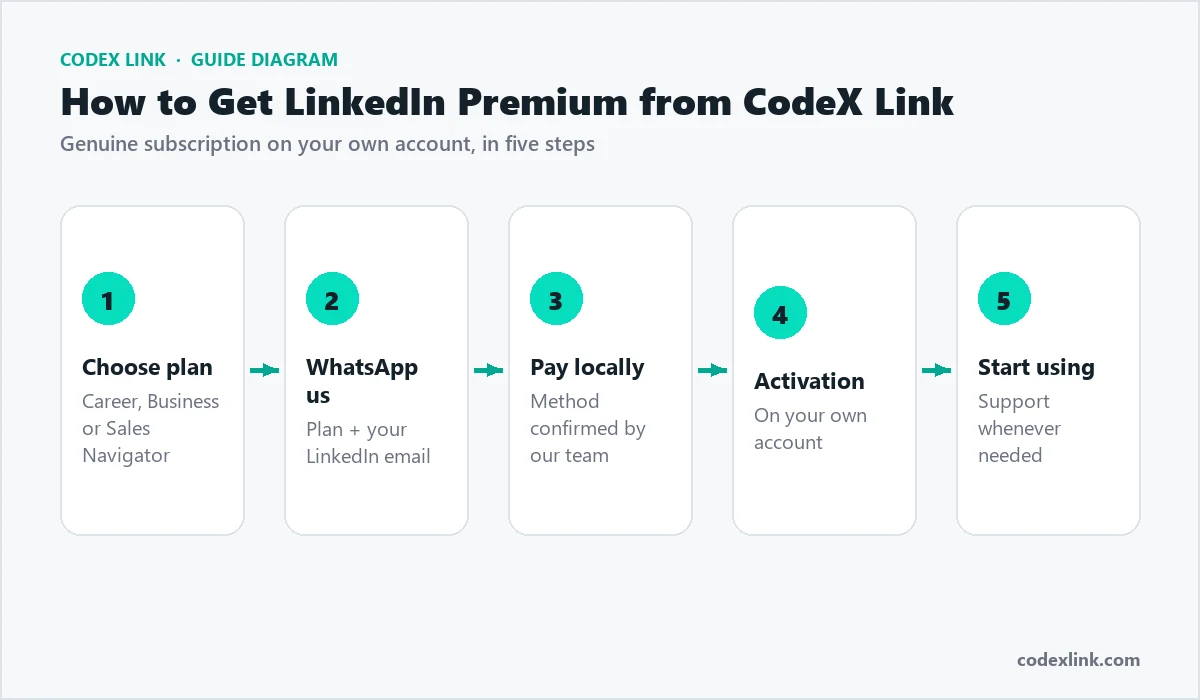
- Choose your plan on the CodeX Link marketplace.
- Message our team on WhatsApp with the plan and your LinkedIn account email.
- Pay with a method our team confirms.
- The subscription is activated on your own account.
- Start using Premium, with support whenever you need it.
Verification in Australia
In Australia, LinkedIn identity verification normally runs through Persona and needs an Australian ePassport, scanned with your phone so the chip can be read, followed by a selfie. Make sure your profile name matches the passport. Workplace verification through a company email is also available for many employers. See our verification by country guide.

Getting the most from Premium
- Message recruiters after applying with a short InMail.
- Check who viewed your profile and follow up with recruiters in your field.
- Apply early to roles where applicant insights show a strong match.
- Finish a LinkedIn Learning course relevant to your target role and add the certificate.
- Post about your work once a week to stay visible.
An InMail to an agency recruiter in Melbourne:
Hi Liam, I saw you recruit data roles in Melbourne. I am a Data
Analyst with 5 years in retail analytics (SQL, Python, Power BI),
full working rights, and available in two weeks. I have just
applied for the Senior Analyst role you posted. Happy to chat
whenever suits you.
References and background checks
Australian employers usually check two or three professional references before making an offer, and some roles require police checks or working with children checks. Keep in touch with former managers on LinkedIn, ask them in advance whether they are happy to be referees, and request written recommendations on your profile so recruiters see evidence of your work early.
Skills to learn with LinkedIn Learning
Premium includes LinkedIn Learning. Popular areas for Australian job seekers include data analysis, project management, cloud computing, cybersecurity, digital marketing and leadership. Add certificates to your profile as you complete them, and mention new skills in a short post to show recruiters you are building capability.
Networking events
Industry associations, meetups and conferences are popular in Australian cities. Use LinkedIn to see who is attending, connect with people you meet on the same day with a personal note, and follow up within a week. Many roles in Australia are filled through referrals, so these relationships matter.
Salary research and negotiation
Australian job ads often include salary ranges, and many packages are quoted "plus super" or "including super", referring to compulsory superannuation contributions. Make sure you compare like with like. Use posted ranges, conversations with recruiters and company insights on LinkedIn to understand market rates before you negotiate.
Free trial and cancellation
Eligible members can usually try Premium free for one month. The trial renews automatically unless you cancel under Settings, then Subscriptions and payments; you keep features until the end of the period. See our Premium discounts and free trial guide.
Staying safe from scams
- Be cautious of job offers that require upfront payments, visa fees or "training" costs.
- Check that recruiters work for real agencies or employers.
- Never share your tax file number or bank details before a verified offer and formal onboarding.
Premium features glossary
- InMail: messages to people outside your network.
- Who viewed your profile: a fuller list of profile visitors.
- Applicant insights: how you compare with other applicants.
- Open Profile: lets anyone message you for free.
- LinkedIn Learning: the course library included with Premium.
Common mistakes
- Not stating your work rights, so recruiters skip your profile.
- Using overseas job titles that Australian recruiters do not search for.
- Writing overly formal messages for an informal business culture.
- Upgrading before completing your profile.
- Buying shared accounts from unofficial sellers.
Tracking your progress
Keep a weekly record of applications, recruiter conversations, interviews and offers. If recruiters view your profile but do not call, refine your headline and About section; if you get interviews but no offers, practise behavioural questions. Small weekly improvements make the most of a short Premium plan.
Company pages and employer branding
Australian employers increasingly compete for talent, and an active LinkedIn company page with regular updates, employee stories and job posts helps attract candidates. Small businesses should ask staff to link their profiles to the company page and share updates. Candidates research employers on LinkedIn before applying and before interviews, so a professional page builds trust on both sides.
Is LinkedIn Premium worth it in Australia?
For active job seekers, skilled migrants and contractors between roles, Premium Career is often worth it for the months you are searching, because Australian hiring is so recruiter-driven. For consultants and B2B sellers, Premium Business or Sales Navigator pays off when used every week. If you are not searching or selling, keep the free plan and a strong profile.
Whichever plan you choose, set a clear goal for the subscription period, such as a number of recruiter conversations, interviews or client meetings, and review it every fortnight. A measurable goal keeps your effort focused and helps you decide whether to continue after the plan ends.
Persistence pays off in Australia's recruiter-driven market: keep your profile current, stay in touch with recruiters and follow up politely after every application.
How CodeX Link can help
Get genuine Premium Career from $10.99, Premium Business from $11.99 and Sales Navigator for $19.99, activated on your own account, from the CodeX Link marketplace. New to LinkedIn? Follow our LinkedIn roadmap.