

The UK has one of the most active LinkedIn communities in the world. Recruiters in London's finance and technology sectors, consultancies across the country and B2B companies of every size rely on it. This guide explains what LinkedIn Premium costs in pounds, how VAT works, which plan suits you, and how to use LinkedIn to get hired or win business in the UK.
LinkedIn Premium price in the UK at a glance
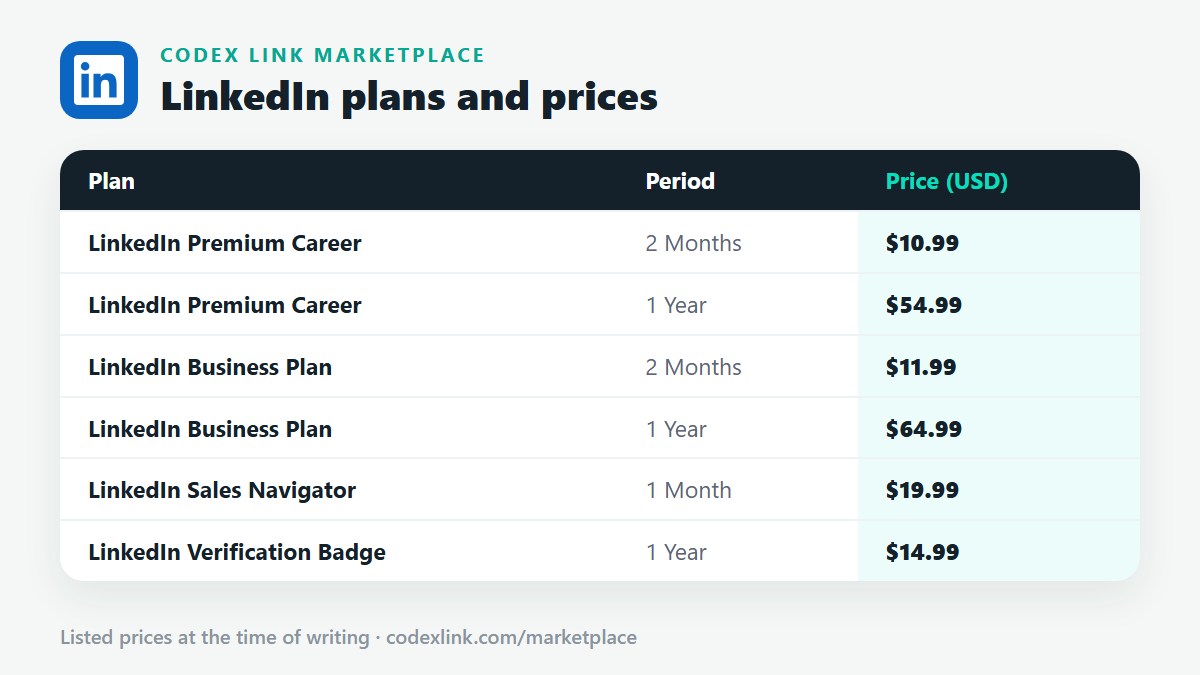
| Plan | US list price (monthly) | Approx. GBP* | CodeX Link price | Approx. GBP* |
|---|---|---|---|---|
| Premium Career | about $29.99 | about 24 / month | $10.99 / 2 months $54.99 / 1 year | about 9 about 43 |
| Premium Business | about $59.99 | about 47 / month | $11.99 / 2 months $64.99 / 1 year | about 9.50 about 51 |
| Sales Navigator Core | about $99.99 | about 79 / month | $19.99 / 1 month | about 16 |
*At an example rate of 0.79 GBP per USD. LinkedIn usually charges UK members in GBP at its own local price, including VAT for consumers, which may differ from a direct conversion; annual billing usually lowers the monthly cost. LinkedIn shows the final price at checkout.
VAT on LinkedIn Premium in the UK
Digital services sold to UK consumers include 20% VAT. VAT-registered businesses that buy LinkedIn for business use should provide their VAT number where possible and keep invoices, as the VAT treatment can differ for business customers. Ask your accountant about reclaiming VAT.
Which plan should you choose?
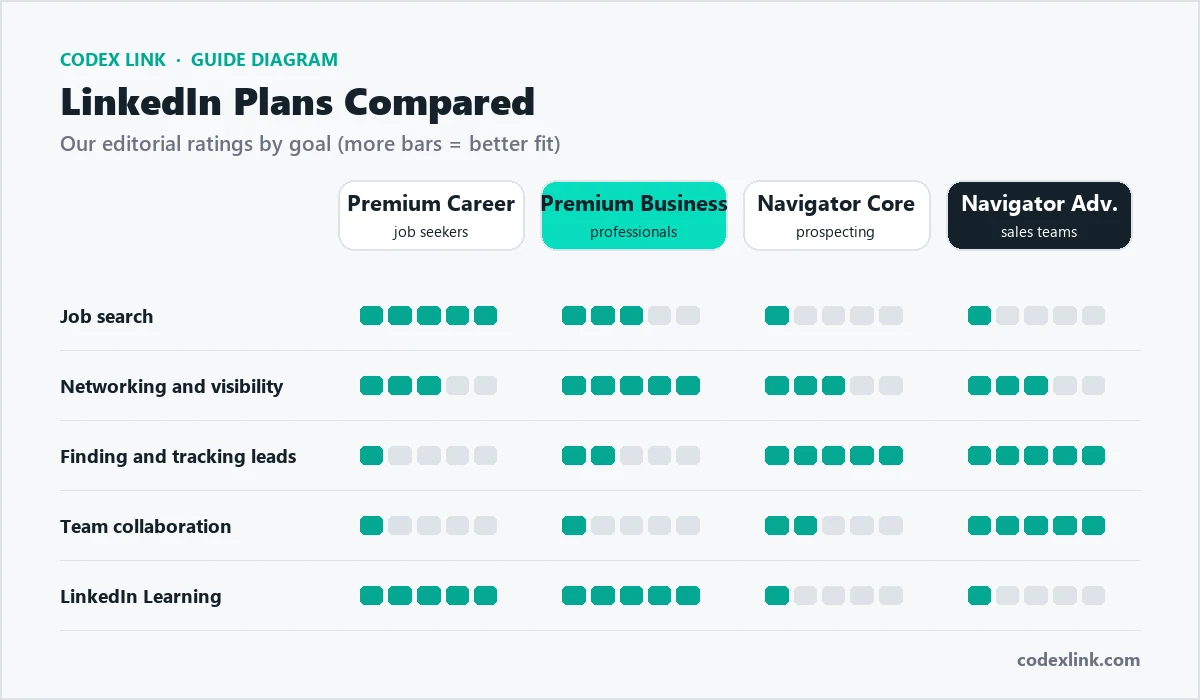
- Premium Career: for job seekers, graduates and career changers. See our Premium Career guide.
- Premium Business: for consultants, freelancers, contractors and owners. See our Premium Business guide.
- Sales Navigator: for B2B prospecting in the UK and Europe. See our Sales Navigator guide.
Job hunting in the UK
UK recruitment combines job boards, recruitment agencies and direct sourcing on LinkedIn. Recruiters search LinkedIn for keywords, location and right to work.
- Use UK terms: "CV" rather than "resume", UK job titles and UK qualification names.
- Set your location to your city and add commutable areas or "hybrid" preferences in Open to Work.
- Mention your right to work in the UK where relevant, for example settled status or visa type.
- Apply early and message the recruiter with a short InMail.
- Build relationships with specialist recruiters in your sector.
A headline built for UK recruiters:
Senior Software Engineer | Python, AWS, FinTech |
Hybrid or remote | Right to work in the UK | London
Key UK job markets
- London: finance, fintech, technology, law, consulting, media and head offices.
- Manchester: technology, digital, media and professional services.
- Birmingham: finance, professional services and manufacturing.
- Edinburgh and Glasgow: financial services, technology and energy.
- Cambridge and Oxford: life sciences, research and deep technology.
- Leeds and Bristol: financial services, digital and aerospace.
Remote work and working with Europe
Many UK companies hire remotely within the UK, and some hire across Europe. The UK's time zone overlaps with most of Europe and partly with the US East Coast, which makes UK professionals attractive for international teams. When targeting remote roles, specify your location, time zone and whether you can travel to an office occasionally.
References and background checks
UK employers commonly request references and run right-to-work checks, and some roles require DBS checks or financial services vetting. Keep good relationships with former managers on LinkedIn, ask permission before naming them as referees, and collect written recommendations on your profile to build trust early in the process.
Graduates and students
UK graduate schemes often open applications in the autumn, a year before the start date. Students should add placements, internships, societies and projects to LinkedIn, follow target employers, and connect with alumni through their university's LinkedIn page. International students should research the Graduate route and sponsorship rules on official government sources, and be accurate about their work rights.
Skilled workers and international candidates
Professionals moving to the UK often need a sponsored visa. Be clear on LinkedIn about whether you require sponsorship, and target employers with a sponsor licence. Network with professionals from your home country already working in UK companies in your field, and translate your experience and qualifications into UK equivalents.
Contractors and freelancers
The UK has a large contractor market in IT, finance and engineering, often through agencies. Contractors keep their availability, day-rate expectations and recent projects up to date on LinkedIn and stay in touch with recruiters between assignments. Freelancers use Premium Business and Sales Navigator to win direct clients and show recommendations from past clients.
Selling in the UK with Sales Navigator
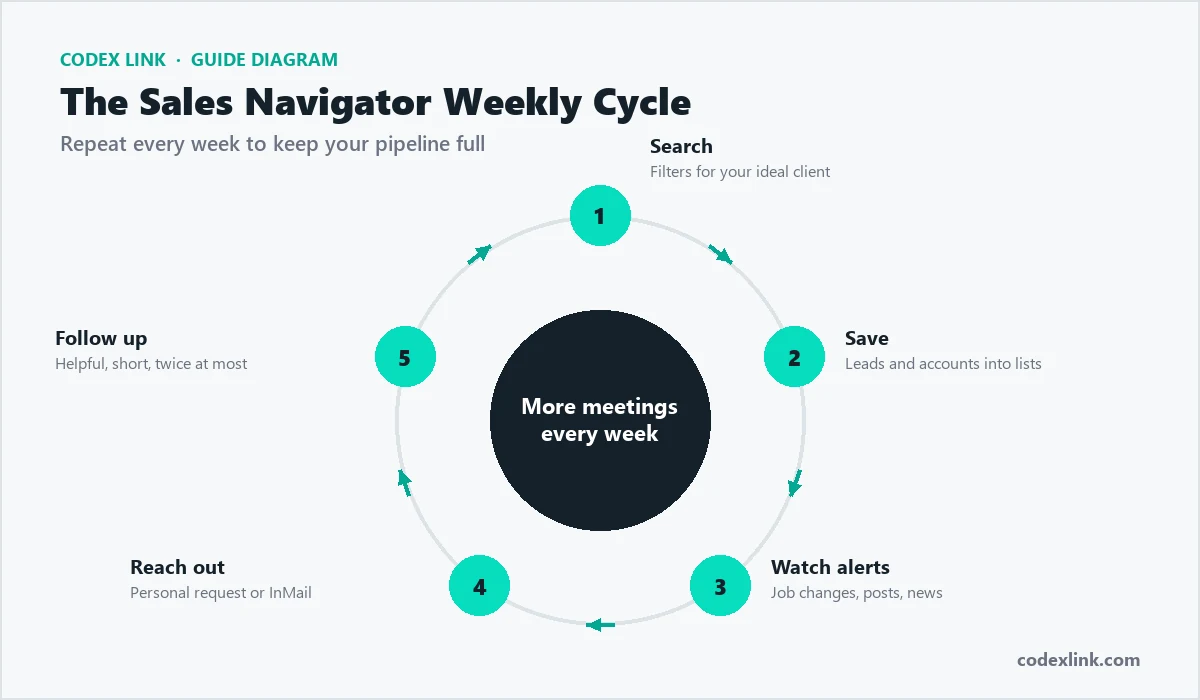
The UK is a major B2B market and a gateway to Europe. Sales Navigator lets you target decision-makers by region, industry and company size.
A lead search for a marketing agency:
Geography:     Greater London, Greater Manchester, West Midlands
Function:      Marketing
Seniority:     Head, Director, CXO
Company size:  11-50, 51-200
Industry:      Retail, Consumer Services, Software Development
UK buyers tend to value polite, understated, evidence-based messages over bold claims. Mention relevant UK clients or case studies, and respect GDPR and UK data protection rules in all outreach.
How to get Premium through CodeX Link
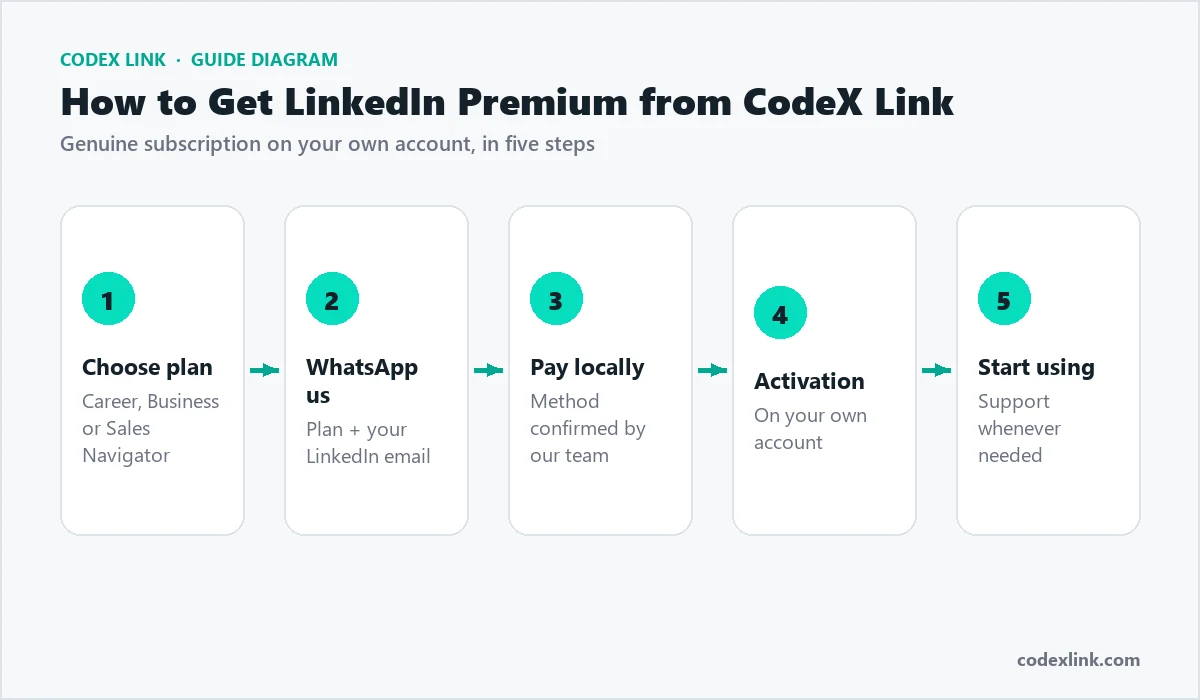
- Choose your plan on the CodeX Link marketplace.
- Message our team on WhatsApp with the plan and your LinkedIn account email.
- Pay with a method our team confirms.
- The subscription is activated on your own account.
- Start using Premium, with support whenever you need it.
Verification in the UK
In the UK, LinkedIn identity verification normally runs through Persona and needs a biometric UK passport, scanned with your phone so the chip can be read, then a selfie. Make sure your profile name matches your passport. Workplace verification through a company email is also widely available. See our verification by country guide.

Getting the most from Premium
- Use InMail after every important application.
- Check who viewed your profile and reconnect with recruiters in your sector.
- Use applicant insights to focus on roles where you are a strong match.
- Complete LinkedIn Learning courses and add certificates to your profile.
- Post about your work to stay visible to recruiters and buyers.
An InMail to a hiring manager in London:
Hi Charlotte, I have just applied for the Compliance Analyst role.
I bring four years of AML and KYC experience at a payments firm,
including leading our last FCA audit preparation. I have full
right to work in the UK. I would be glad to discuss how I could
support your team.
Skills to learn with LinkedIn Learning
Premium includes LinkedIn Learning. In-demand areas in the UK include data analysis, cloud and cybersecurity, product management, project management qualifications such as PRINCE2 preparation, digital marketing and leadership. Add certificates to your profile and connect what you learned to real projects in your posts.
Networking events and professional bodies
The UK has a strong culture of professional bodies and industry events, from tech meetups in London and Manchester to chartered institutes and trade associations. Use LinkedIn to connect with people you meet at events, join groups linked to your professional body, and engage with posts from leaders in your sector. Referrals remain one of the most effective routes into UK companies.
Company pages for UK businesses
UK small businesses and startups should maintain an active LinkedIn company page with regular updates, case studies and job posts, and ask employees to link their profiles to it. Buyers and candidates check company pages before engaging, and an active page builds credibility quickly.
Salary research and negotiation
Many UK job ads include salary ranges, and London roles often carry a premium over other regions. Use posted ranges, recruiter conversations and LinkedIn company insights to understand your market rate, and consider the full package, including pension contributions, bonus, hybrid working and holiday allowance.
Free trial and cancellation
Eligible members can usually try Premium free for a month; it renews automatically unless cancelled under Settings, then Subscriptions and payments. You keep features until the end of the period. See our Premium discounts and free trial guide.
Staying safe from scams
- Be wary of offers that ask for payment for training, equipment or visas.
- Check that recruiters and companies are genuine, for example on Companies House.
- Never share your National Insurance number or bank details before a verified offer.
Premium features glossary
- InMail: messages to people outside your network.
- Who viewed your profile: a fuller list of profile visitors.
- Applicant insights: how you compare with other applicants.
- Open Profile: lets anyone message you for free.
- LinkedIn Learning: the course library included with Premium.
Common mistakes
- Not stating right to work, so recruiters skip your profile.
- Using US spelling and terms when applying to UK employers.
- Sending overly salesy messages to UK buyers.
- Upgrading before completing your profile.
- Buying shared accounts from unofficial sellers.
Tracking your progress
Record applications, InMails, recruiter calls, interviews and offers each week. If recruiters view your profile but do not contact you, sharpen your headline and keywords; if interviews do not convert, practise competency-based questions using the STAR method. Weekly adjustments help you get the most from a short Premium plan.
Career changers in the UK
Many UK professionals use LinkedIn to move into new fields such as data, technology, project management or sustainability. Rewrite your headline around the role you want, highlight transferable skills and relevant courses, and reach out to people who made the same switch for advice. Short informational chats are widely accepted in the UK and often lead to referrals. A two-month Premium Career plan, combined with LinkedIn Learning courses in your new field, gives a career change a focused start.
Using LinkedIn on mobile
Most UK members use LinkedIn on their phones during commutes. The app is the easiest place to verify your identity, reply quickly to recruiters, apply for jobs and check profile views. Keep detailed profile editing and Sales Navigator research for your laptop, and use the app to stay responsive throughout the day.
Is LinkedIn Premium worth it in the UK?
For active job seekers in competitive sectors such as finance, tech and consulting, Premium Career is often worth it while you search. For contractors and consultants, Premium Business keeps you visible and makes outreach easier. For B2B sellers, Sales Navigator pays off with regular use. If you are not searching or selling, a complete free profile is enough.
Recruiting in the UK
UK small businesses that hire occasionally can use LinkedIn Jobs, Recruiter Lite or simply a Premium plan with InMail to reach candidates directly, reducing agency fees. Write clear job posts with salary ranges, hybrid arrangements and the benefits candidates care about, and respond to every applicant promptly. A good candidate experience strengthens your employer brand on LinkedIn.
Whichever plan you choose, set a clear goal for the subscription period and review your progress every two weeks, so Premium works as an investment rather than a cost.
Above all, consistency matters most in the UK market: a complete profile, regular posts and polite, specific outreach every week will bring more opportunities than any single feature, and it builds a reputation that keeps working for you.
How CodeX Link can help
Get genuine Premium Career from $10.99, Premium Business from $11.99 and Sales Navigator for $19.99, activated on your own account, from the CodeX Link marketplace. New to LinkedIn? Follow our LinkedIn roadmap.