
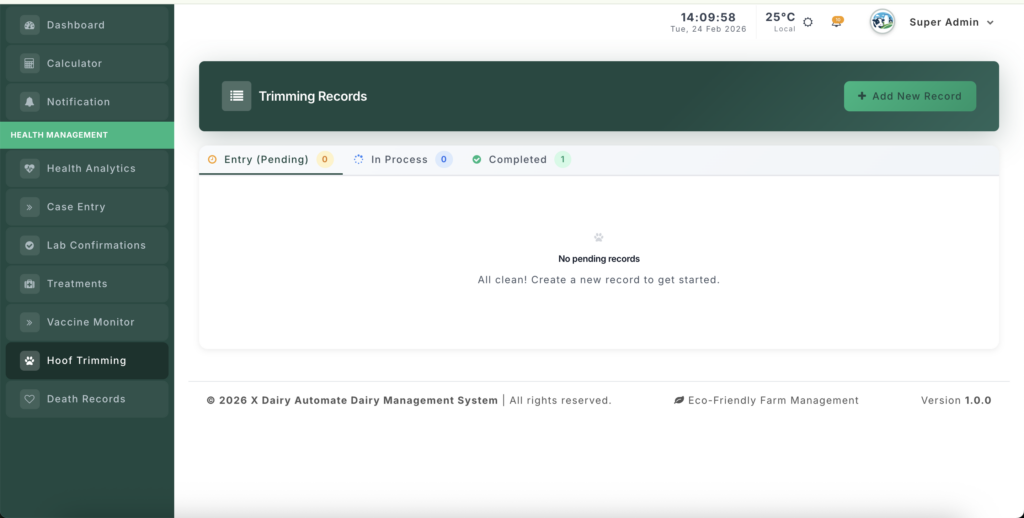
The Hoof Trimming module is designed to monitor and manage hoof health across your dairy herd. Proper hoof care reduces lameness, improves milk production, and prevents long-term mobility issues.
This guide explains how to create records, manage progress, and ensure animals receive timely and effective hoof care.
Feature Overview #
The module provides a structured and easy-to-follow workflow for:
- Recording Services
Log both routine preventative trims and therapeutic treatments. - Health Tracking
Monitor lameness scores (1–5 scale) and detailed hoof conditions. - Workflow Lifecycle
Move records through:- Pending
- In Process
- Completed
- Follow-Up Scheduling
Assign recheck dates for animals requiring additional care.
How to Manage Hoof Trimming #
1️⃣ Dashboard (Status Tabs) #
The main page organizes records into three clearly defined tabs:
🟡 Pending #
- Newly created records
- Scheduled but not yet started
🔵 In Process #
- Animals currently being trimmed
- Sessions actively underway
- Treatments ongoing
🟢 Completed #
- Finalized trimming records
- Historical hoof health archive
This status-based organization ensures no animal is overlooked.
2️⃣ Creating a New Record #
To log a trimming session:
Step 1: Select Group/Shed #
Choose the shed where the animal is housed.
This filters the animal list for faster selection.
Step 2: Select Animal #
Pick the specific animal tag or name.
Step 3: Set Trimming Type #
- Routine — Preventative maintenance trim
- Therapeutic — Addressing a hoof issue or lameness case
Step 4: Assign Lameness Score #
Score mobility using the 1–5 scale:
- 1 = Healthy / Sound
- 2 = Slightly uneven gait
- 3 = Mild lameness
- 4 = Obvious lameness
- 5 = Severely lame
Step 5: Add Detailed Information #
Record:
- Affected Hoof (e.g., Front Right, Rear Left)
- Lesion Details (e.g., Sole Ulcer, Digital Dermatitis)
- Treatment Applied
- Additional remarks
Step 6: Save #
The record will automatically appear under the Pending tab.
3️⃣ Updating Status (Workflow Management) #
Proper status movement ensures clear operational tracking.
▶ Start Trimming #
- Click Process on a Pending record
- Status changes to In Process
✔ Finalize Session #
- Update treatment notes if needed
- Set status to Completed
- Record moves to historical archive
Always complete sessions promptly to maintain dashboard accuracy.
4️⃣ Scheduling Rechecks #
If follow-up care is required:
- Set a Recheck Date
- Useful for:
- Removing bandages
- Monitoring lesion healing
- Re-evaluating high lameness scores (3–5)
This ensures continuity of care and prevents relapse.
💡 Best Practices #
🎯 Maintain Consistent Scoring #
Using the same scoring method across staff members:
- Improves long-term health tracking
- Identifies chronic lameness early
- Supports herd-level analytics
📝 Record Detailed Observations #
Detailed remarks help:
- Future trimmers understand previous issues
- Identify recurring shed-level problems
- Improve preventive management
⏱ Update Status Immediately #
Completing records right after sessions:
- Keeps dashboards accurate
- Prevents operational confusion
- Improves staff accountability
📊 Management Insight #
Lameness is one of the most expensive hidden costs in dairy farming.
Tracking hoof trimming properly helps:
- Maintain milk production levels
- Reduce treatment expenses
- Improve animal welfare compliance
- Prevent premature culling


Leave a Reply
You must be logged in to post a comment.